On copywriting, authenticity, and finding creative freedom as a freelancer
Kate Marshall is an independent senior copywriter and personality hire based in LA. She loves her spanish-style apartment and microscopic dogs. She also recently gave up caffeine. Brave!
MK: Hey Kate! What's up, you've worked for some companies I'd be hyped to have on my CV, like Webflow and Clay, how did you get into the copywriting game?
KM: Hey Mon! Ah, thank you. I genuinely feel lucky to have a job that I like.
I didn't go to portfolio school, and I've spent much of my career working in-house at tech companies. I was in the content game for a long time before transitioning into copywriting, but that's not to say I'm not still learning on the job. I mean, I used to have an editor that absolutely schooled me in grammar - if you asked me right now what an adjunct is, I couldn't tell you. I didn't learn what a gerund was until I was several years in. Catch me on Google DAILY.
My first "official" copywriting job was at Webflow. My first manager, Mischa Vaughn (shout out, love you) took a chance on me, and the rest is history. One of my biggest tips for creatives is to join creative Slack groups – ask around, see who's in them, ask them to add you. It's how I found the Webflow job, and because of that I was able to connect with Mischa directly before I ever submitted an application. Fast pass to skip the line at Disney World type of energy.
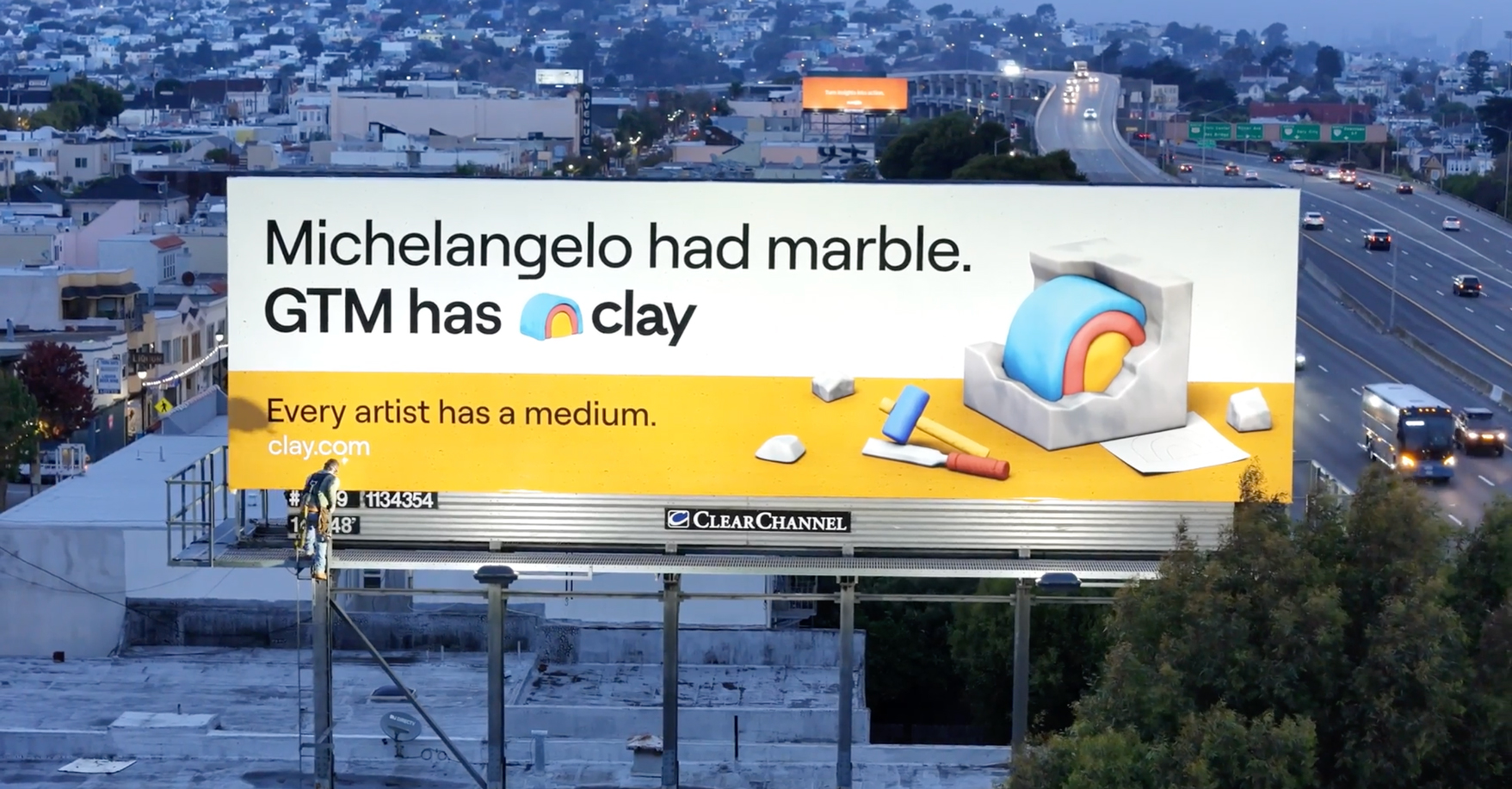
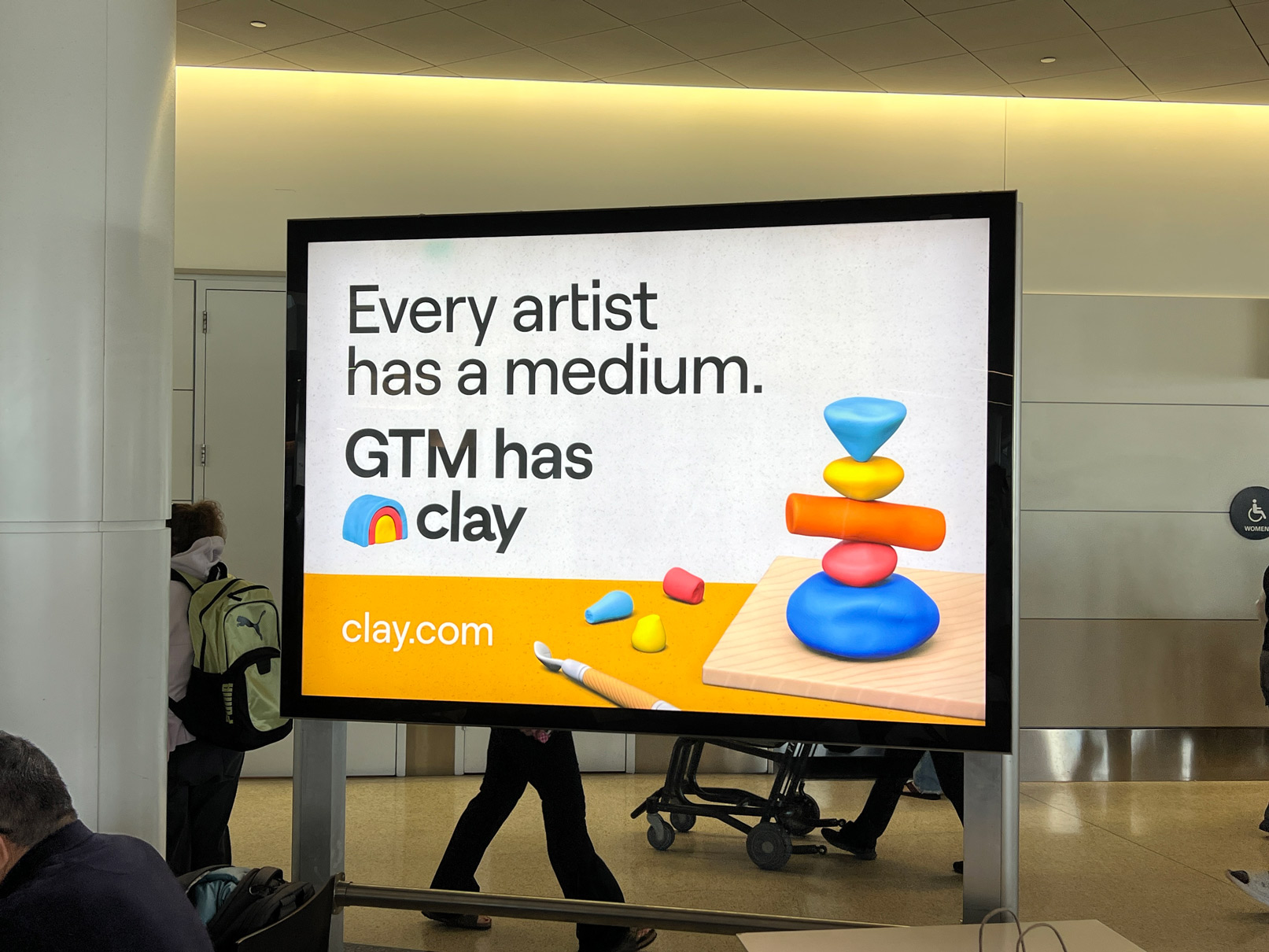
MK: I wanted to chat about the Clay OOH Campaign because I saw this everywhere! And the concept and writing was so sharp. How did the idea come about?
KM: Ah, thank you! It’s still surreal to see photos of it all over the trains I used to take every day.
Anyone who knows Clay knows they’re a very creative team with a strong vision and commitment to brand, so it was really cool to see how all of their creative minds came together. They’d been sitting on the idea for over a year, but didn’t really know if it was the right direction or if there was any real meat to it. Really, I think they just needed someone to come in, pin it down, and make it stick.
To give you a peek into the process, I took the concept and came up with a bunch of different copy directions (there’s still one that I hope we can do as a follow-up… wink wink @clay) but ultimately we agreed that the best path was just kind of the concept in proper copy form. There were some legal drawbacks — apparently dead famous artists have something called “their estate”, booooo — and that eliminated some of the more diverse names on the list, but I’m really happy with how it turned out.
MK: What's your approach to brand voice? How do you think about making a company sound like itself?
KM: The first time I did a big brand voice overhaul (at Webflow), I was granted a fairy godmother [consultant] to help shepherd me through it. Her name is Anna Pickard and we vibed immediately. She gave me the best piece of intel that I still carry with me into every workshop: at its core, your brand voice is just an extension of your company culture.
A brand is like a person in that you grow and evolve over the course of your life, but you're still you. Maybe when you're younger, you're a bit more vivacious in the way you speak – unafraid to be a bit loud, be playful, shake things up a bit. But as you grow up, you might maintain your sense of self while communicating more pedantically and deliberately. 9.5 times out of 10, it's the same thing with a brand.
To craft a successful brand voice, you have to roll with the tides and make something that's actually useful for you in the moment. Lean into what you know at the time, then change it when it's ready to be changed. Brand voice is never written into law.
MK: Any advice for other creatives looking to go freelance? It feels more accessible than ever, but standing out can be difficult. What's your playbook?
KM: Listen, I'm going to be so honest. I'm a great writer, but I owe so much of my career to the way I've approached my "at work" persona… or lack thereof.
I've always showed up really authentically at work – why would I stop saying "boots!" just because I'm on a Zoom call? – and although I think it's partly just a disease I cannot cure, I also knew being myself eventually had to lead me to places I gave a shit about with people who gave a shit about me.
Since going freelance a year and a half ago, all of my work has found me. One person I work with on one project will recommend me for another, and on and on and on. It's like a clown pulling the scarves out of their sleeve, but the scarves are projects that pay my rent.
People really appreciate when other people are real. So my advice is: Tell someone you want to work with them on something some time! Tell them you admire their work and want to learn from them! Reach out to someone you don't know yet but want to! You might get a no, but you'll never get a yes if you don't ask. Only good things can come from showing up authentically and caring about people.
MK: Everyone romanticizes freelance as pure creative freedom and corporate as soul-crushing. What's actually the real trade-off you're making between the two?
KM: A good friend of mine was recently telling me about his job hunt. He asked me, "Would you go full time back into the fire?" and I said, "I would have to get paid sooo much money."
I'm exaggerating there, but admittedly, I'm in the camp of romanticism right now. Freelance has liberated me of the corporate hoopla in a way that feels really good, especially in the current climate. Being independent gives me more control over who and what I support, though it is true that the balancing act can be tough – sometimes you just have to take what you can get. Also, the constant context switching blows. That's probably the worst part for me.
I struggle with a good amount of mental health issues, so having the agency to turn something down if I don't have the capacity (and can pull it off financially) has been so liberating. I don't have to do formal performance reviews or attend all-hands meetings, both huge scores. I don't have to worry about when I'm getting my next promotion, because I'm in control of how much I make and how much work is needed for me to make it. Capitalism forces us on this ladder with the illusion of reaching the top, but there is no top. There will always be something else you're expected to reach for, so you might as well try and dictate what that is.
I'm sure I'll miss the consistency of in-house stuff some day, and then miss all of this, on and on forever. I miss having consistent work friends I can shoot the shit with. I miss knowing one thing really well, because context switching is really hard for a brain that already works overtime. But being challenged creatively is something I've always craved, and now I have it, AND I'm getting recognition for stuff I'm genuinely proud of?? I'm really grateful.
MK: I know you recently made the switch from East coast to West, how's it all going and how are you enjoying the pace of LA?
KM: When I met my partner Kass two years ago, I had just moved to NYC and she was set on moving to LA. I told her I'd never live in LA. I'll give you a sec to guess who moved to LA first.
New York is a beautiful, magical beast of a place. God I love her. But the stress of the city and the East coast winters were no match for the aforementioned mental health issues, and the weather and pace in LA has been nothing short of miraculous for my stability. I hated the thought of being someone who can't hang, begrudgingly following the same path as so many losers before me. But now I feel so confident in saying that the LA hate has absolutely nothing to do with LA itself; it has this perception of being vapid and second-tier, particularly by New Yorkers (sorry). This place is genuinely stunning??? And the people are kind, approachable, and engaged. I love it so far.