Craft bold brands. Build strong teams. Raise the bar. Have fun.
Multidisciplinary brand & creative leader with 2 decades of experience building bold, differentiated brands. I lead rebrands, global campaigns, and scalable systems, grow high-performing teams, and thoughtfully integrate GenAI without sacrificing craft. Mom of 4 living in Austin, TX.
MK: For readers who might not know you yet, can you share a bit about your path into design?
JR: I've been a "creative" for as long as I can remember. Growing up, I loved to draw, collage, I collected Absolut Vodka and Got Milk? ads, obsessed over typography, and spent hours collaging long before I knew any of that could be a career. By high school, I was lucky enough to know I wanted to pursue the arts. My parents enrolled me in after-school classes at the School of Visual Arts in New York, where I created my first art & design portfolio which I used to apply early to Carnegie Mellon University – and was accepted into their Design program. This year marks my 20 year graduation anniversary!
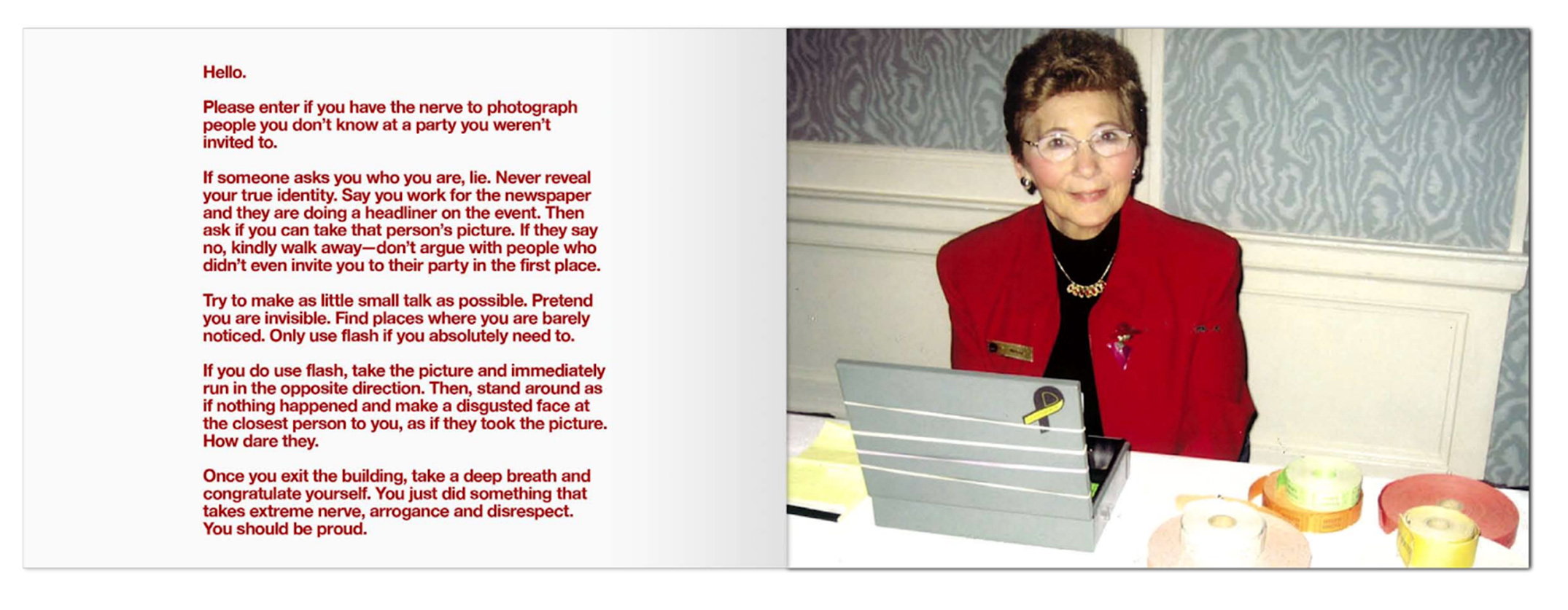
I moved to Pittsburgh and spent four years immersed in the fundamentals: graphic design, design theory, typography, design history, and even industrial design. I minored in creative writing and photography, and—because I've always had a bit of a rebellious streak and proclivity towards the absurd—turned party crashing into my senior year photography thesis.
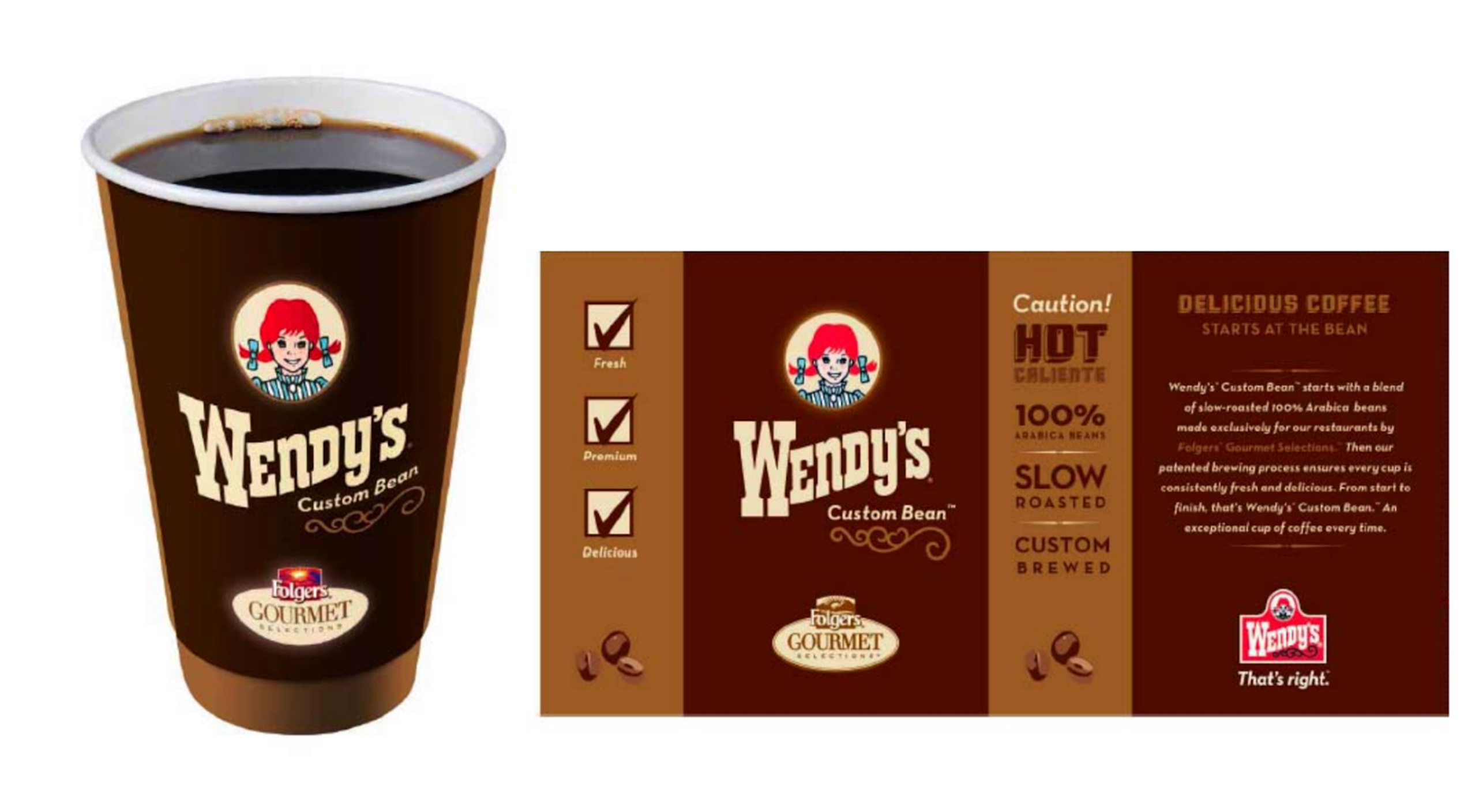
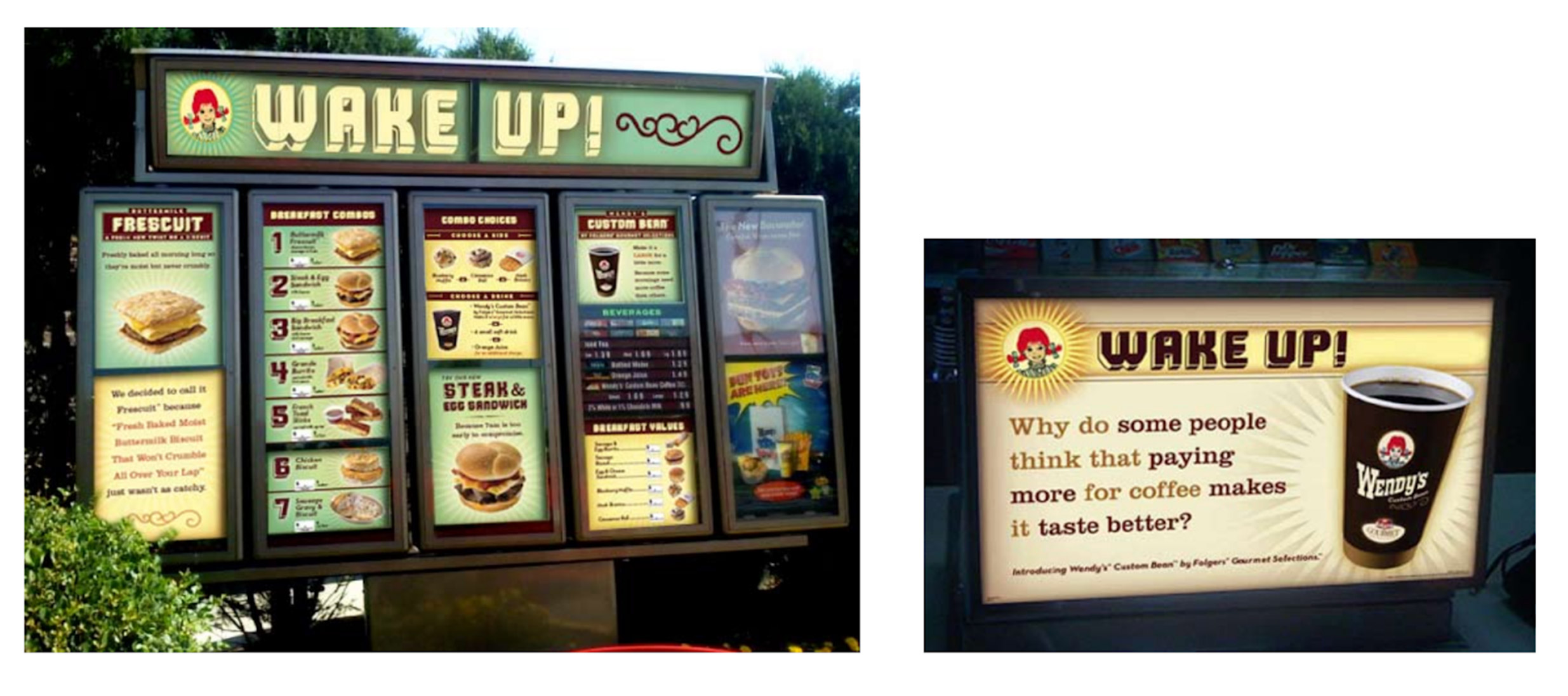
After graduating, I started my career as a graphic designer and art director in advertising, at first working in New York at an agency called Kirshenbaum Bond + Partners. I was the sole designer and art director tasked with the design & art direction for Wendy's first breakfast campaign. It was exhilarating. It also felt very unreal that I would be designing branded coffee cups, custom sandwich foil wrappers, and drive-thru menus that would be installed across the country. ME. Designing FAST FOOD branding for a nationwide franchise. It was very cool. I had a fantastic role model in a creative director there, Gail Barlow. She took me to Columbus Ohio to present to the wendy's client. I was 21 years old and felt like I had no idea what I was doing. But I leaned in, learned so much, and really loved the work.
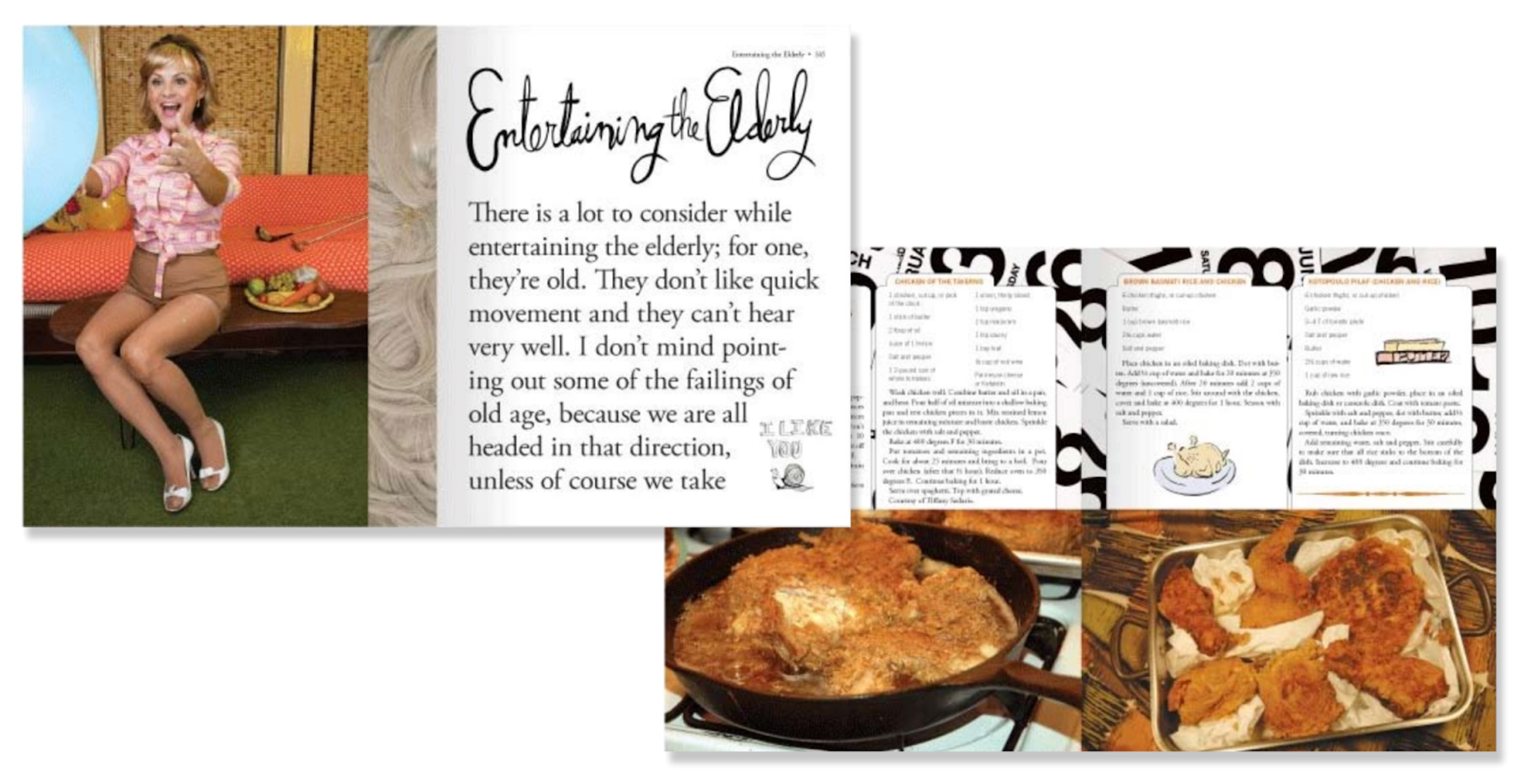
Another pinch me moment was when I got to work out of Amy Sedaris's West Village apartment for an entire summer in 2006, where my friend Lenny and I designed her best-selling book: Hospitality Under the Influence. I got lucky. Lenny was working for Paula Scher at Pentagram, and Amy had originally gone to Pauls asking for a book "just like John Stewart's." Paula was all booked up, so she gave the job to her designer Lenny as a freelance project, as long as he had a friend help him. That friend was me! Amy cooked us dinner in her kitchy apartment. Her rabbit, Tina, would nibble on my laptop case each night- a meal of her own. We met stars like Todd Oldham [who did all of the photography for the book], Justin Theroux, David Sedaris [and their dad], Sarah Jessica Parker. We got to go to the opening book party at Ralph's Candy Bar where we met Stephen Colbert and their other costar from strangers with candy. It was surreal and one of the most memorable career moments.
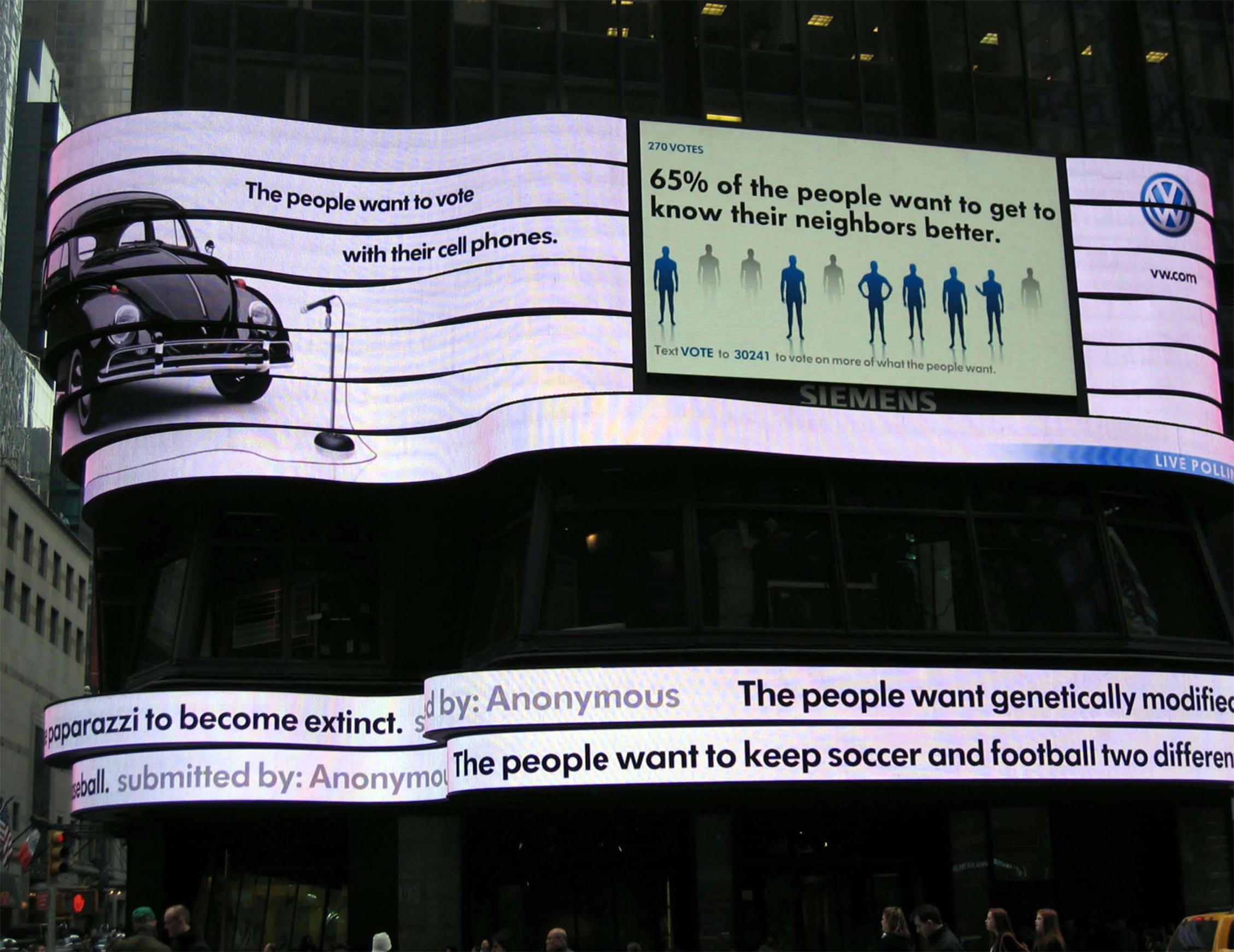
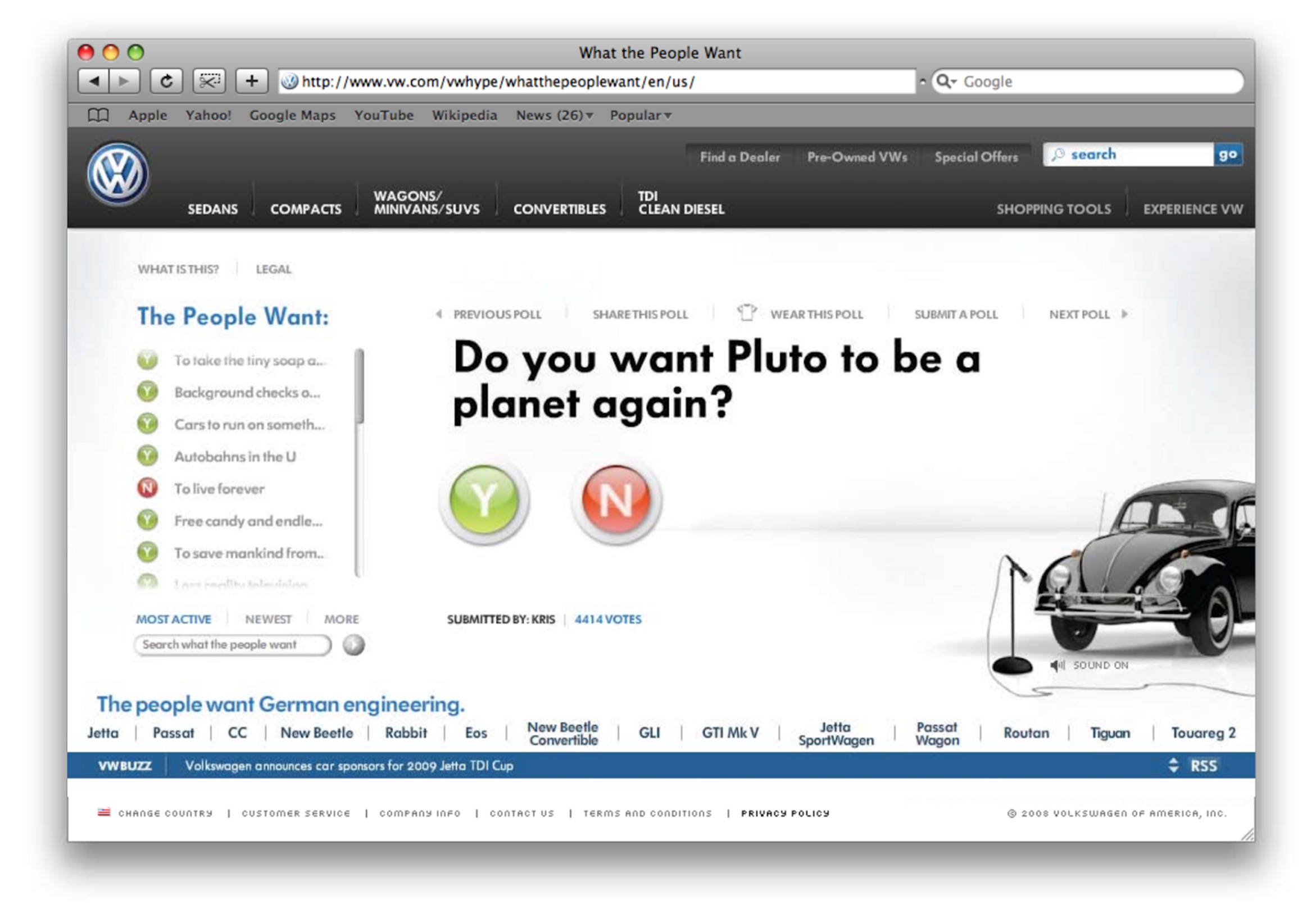
After working in NYC for a few years, I made my way to Boulder, CO where I had the incredible opportunity to work at Crispin Porter & Bogusky as an Interactive Designer. I had never designed or art directed for the web before. It was 2007 and web design & development was an emerging field, as was leveraging the web creatively for advertising. Facebook was the social media platform at the time. Flash-based interactive banner ads were all the rage, and responsive web design wasn't even a thing yet. So here I find myself at the most creative ad shop in the world at the time, learning everything I can about digital design & marketing as everyone else besides me was, while also receiving a masterclass in strategy, bold ideas, and pushing the status quo when it came to campaigns. In a way, it was very much like today with designing for and with AI. Getting to be part of these technology revolutions over and over again has been exhilerating. So at Crispin, I created some interactive campaigns for Volkswagen, TV spots, and interactive banner ads that always aimed to earn attention and memorability. So much ideating and concepting was done and my brain truly recalibrated around how brands can show up in unique and memorable ways.
I'll refrain from writing a full-on novel around where my career went after this. Let's just say I started working in tech in 2010 and haven't looked back since :)
MK: You recently joined AirOps, what drew you to that team, and what makes you bullish about AI search right now?
JR: I first heard about AirOps after seeing the Webflow marketing team share their AEO gains just weeks after adopting the platform. That immediately caught my attention and eventually led to a conversation with Alex. Every discussion we had about where AirOps was headed (and especially the role brand could play in shaping that future) only made me more excited about what we could build together. It's rare to meet a tech CEO that's product led care so deeply about brand so early on in a company's journey - and it was refreshing. He got it, and I knew that I'd be able to do truly great work there with that sort of shared belief.
Beyond Alex and his vision, the people at the company sealed it. This is one of the smartest, most focused teams I've worked with – small but mighty, moving fast, and deeply aligned. What stood out to me most was how much the team genuinely cares about elevating marketers. Not just through software alone, but also through education, community, and research. The mission goes well beyond selling a product. It's also very much about empowering the next generation of marketers to thrive regardless of the shifts that come their way. And that is unique, powerful, and creating a lot of value for those who engage with our programs.
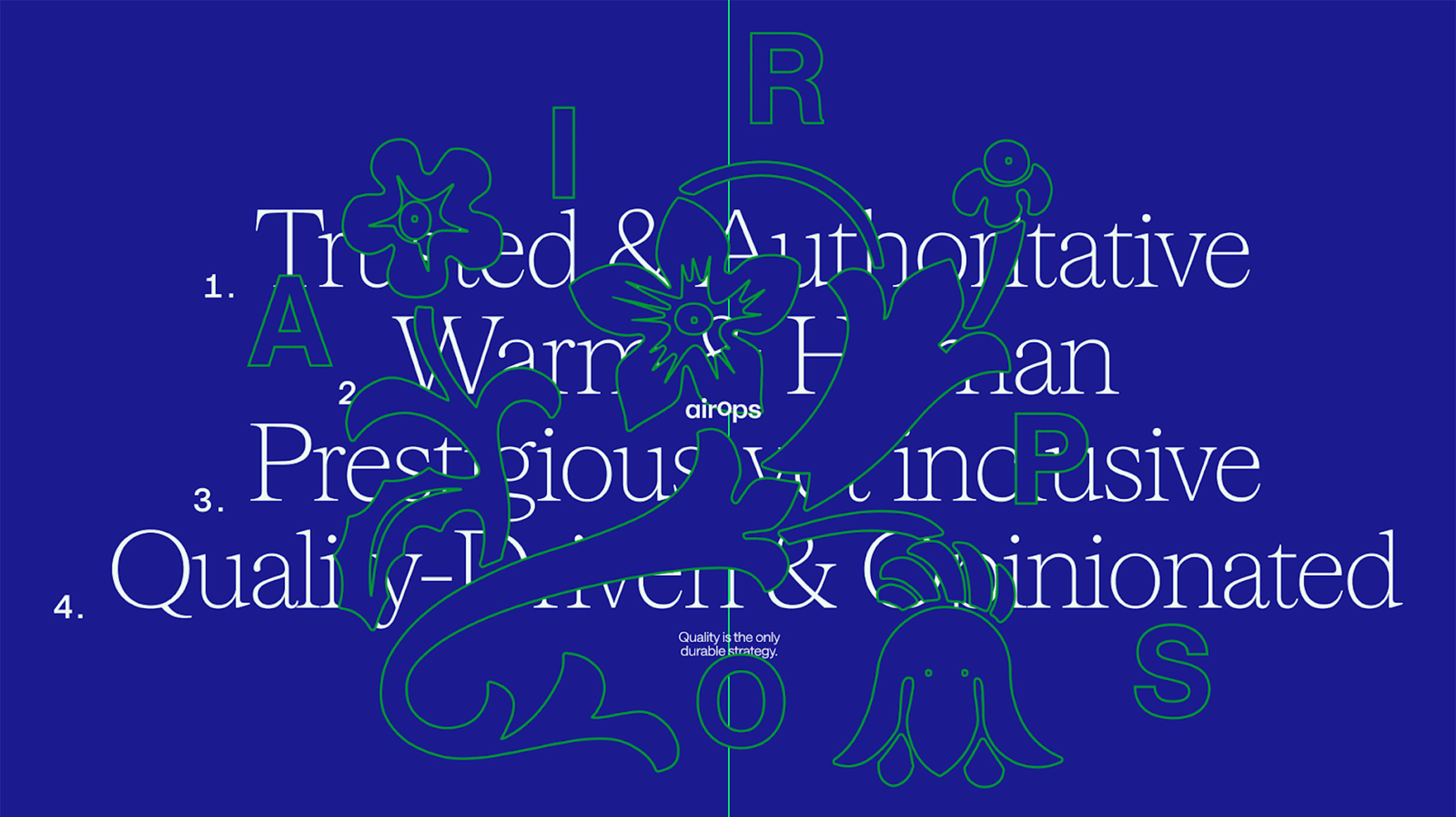
I also deeply resonate with AirOps' core belief that in a world increasingly flooded with AI slop, quality becomes the only real, durable advantage. I believe that to my core. Coming from a design and craft background, standards, intention, and care in the work matter – and AirOps shares that same belief.
After about a month of conversations, pitching ideas, and meeting the team, the decision was a no-brainer. It just felt right. After a long search for the right professional home, AirOps finally felt like it.
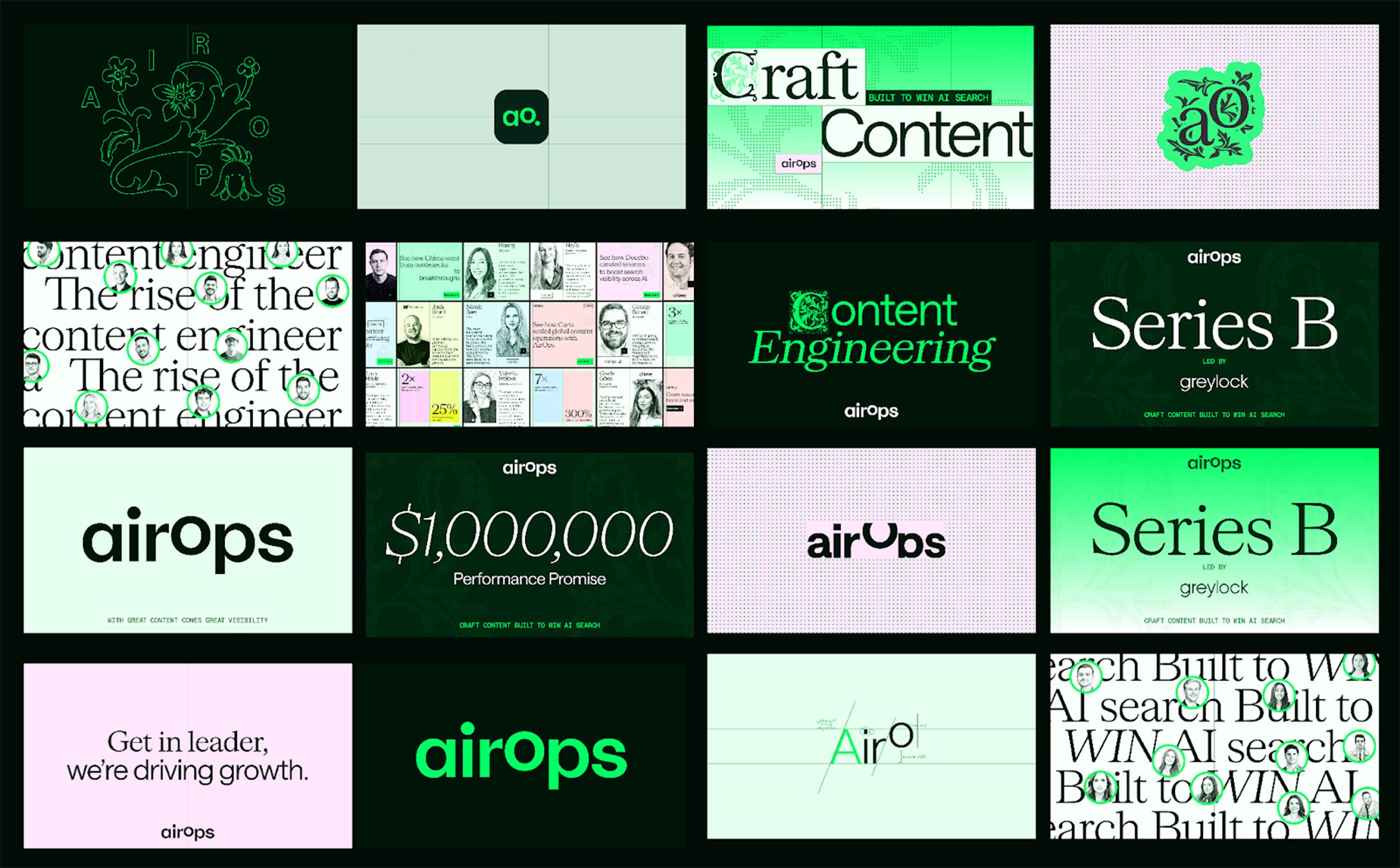
Fast forward few months later, and we were able to craft a unique & differentiated brand rooted in craft & quality - part homage to content creation of the past [editorial, printing press, industrial revolution] combined with the forward looking innovation that we're in the middle of with AI transformation.
MK: We've seen every creative industry start to bend around AI. What shifts have you noticed most in design and creative careers?
JR: Honestly, the biggest shift I'm seeing right now is this: creatives are no longer defined by their tools. They're defined by their ideas, their taste, their experience, and how they think.
The best creatives I know aren't afraid of AI. Quite the opposite, actually. They're curious. They're testing everything. They're bending tools to their style, not the other way around. And they're using AI to move faster from idea to execution, without losing the soul of the work.
We've gone from a world where creativity was mostly about hands-on craft to one where orchestration and direction matter just as much [or arguably even more so]. And honestly? It's been pretty inspiring to watch. Great creatives are guiding systems, shaping prompts, layering context, and sharpening their taste along the way. The craft didn't disappear…it just got a major upgrade.
What's changing is that it's less about doing everything by hand and more about building systems that let you conduct the process and shape something cohesive and intentional. (Which, if we're being real, is what senior creatives have been doing anyway – now it's just way more visible.)
And here's the fun part: when production becomes instant, the strategy, ideas, creative concepts matter more. Taste matters more. Point of view matters more. You can't hide behind pure execution anymore. The creatives who combine strong instincts with strategic, systems-level thinking? Those are the ones quietly pulling ahead while everyone else argues about tools on Twitter.
Lately, it's been especially fun watching designers create wildly impressive things with Cursor, Claude Code, v0, Google AI Studio – all of it. We're leaning into this at AirOps, and it's been incredibly empowering to experiment across the company in this way. And yes, sometimes just for fun.
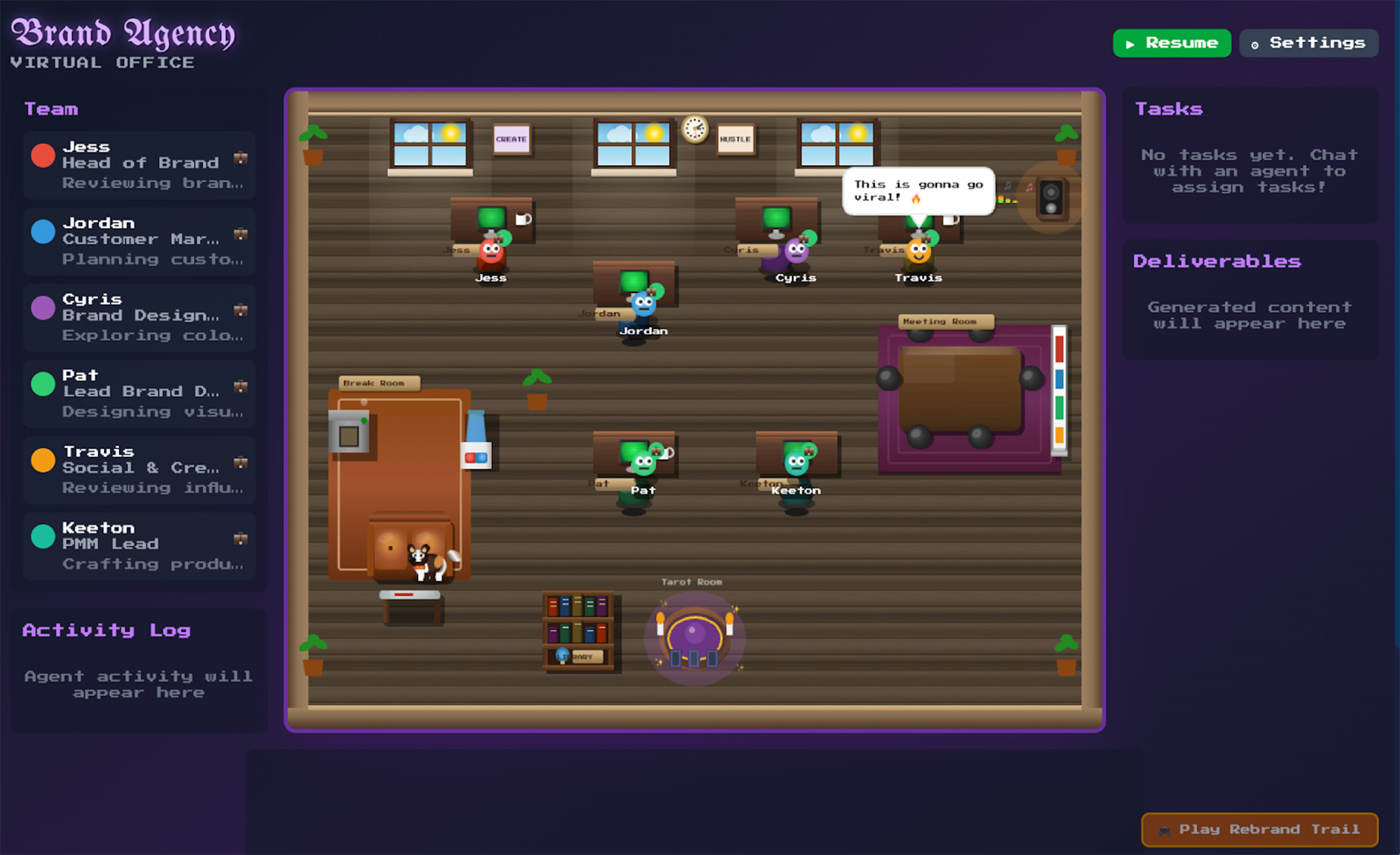
Case in point: I built a digital "brand team HQ" entirely by prompting Claude Code from my Mac's terminal. No Figma file. No setup. Just ideas → prompts → something real.
I mean… come on. That's pretty cool!!
MK: It was awesome to follow along with the Jasper AI rebrand recently. What do you think are opportunity areas for AI brands to stand out?
JR: It's been… interesting to watch how most AI brands have shown up so far. A lot of purple gradients. A lot of dark, techy palettes. A lot of shiny robot worlds floating in space. Some of it is visually impressive. Most of it is forgettable. And almost all of it feels strangely disconnected from any real human story – or from how people actually see themselves using these tools.
It also tends to lead with features first. Which, if history has taught us anything, is a guaranteed way to make powerful technology feel cold, intimidating, or vaguely soulless.
The real opportunity for AI brands is to do the opposite. Lead with warmth. With clarity. With connection. Make people feel something. Help them imagine what their world could look like if they stepped into your brand's orbit – not just what buttons they can click.
Because when these tools are used well, they don't replace people. They supercharge them. And that's an incredibly powerful story to tell. There's a real chance here to make people feel excited and included – instead of overwhelmed or quietly worried they're about to be left behind.
That's what I wanted to bring to Jasper. A sense of humanity. Delight. Confidence without the coldness. I honestly hadn't seen many AI companies do that yet, and it felt like a massive advantage.
AI can be powerful and personal. We don't have to choose.
MK: What's your current AI tool stack look like? Are there any rules of the road you like to follow when using AI?
JR: Oh man, I bounce between a lot of AI tools, and I genuinely love them for different reasons. Instead of trying to crown a single "winner," I think about them as a stack I move through depending on what I'm exploring or trying to make.
Daily drivers: Flora has honestly collapsed my visual tool stack into one place, which is kind of amazing. I use it for both imagery and video, and I'm constantly switching between models – NanoBanana (Pro!), Veo3, ChatGPT Image, Kling, Hailuo… the list keeps growing. Where Flora really shines for me is mixing and matching styles, then exporting at scale while keeping a very specific look and feel. I've also been having a lot of fun with their video models lately (especially Sora). You can explore an aesthetic, push it around, and then carry that same visual language straight into video, all from the same canvas.
Midjourney will forever be my first love. I still remember the very first image I generated over two years ago – I was up half the night playing with it, completely blown away, and very aware that everything was about to change. I still use MJ a lot for early-stage style exploration. Once I land on something I'm excited about, I'll usually bring that direction into Flora to scale it across a bunch of outputs.
ChatGPT is basically with me all day. I use it for everything from thinking through ideas to tightening language to pressure-testing concepts. Voice mode has become my go-to each morning – it's an incredible brainstorming partner. If I'm prepping for a talk, I'll literally riff out loud, practice questions, and work through answers in real time.
Figma + Figma Make, paired with Claude Code and Cursor, is a newer addition for me – the team got me set up last week and… holy moly. It's powerful. I've been vibe-coding some pretty wild ideas and I've honestly never felt more capable technically. It's unlocked a whole new level of speed and confidence.
Rules of the road: Here's the secret – there really aren't any rules. We get to make them. My only real advice is to lean hard into curiosity. Spend time learning what these tools can actually do, across the entire stack. The more fluent you are in what's possible, the better you get at knowing which tool to reach for, and when. That judgment is the real superpower.
MK: I work in Devtools now, so I'm excited to check out the Diana Mounter episode of Ladies Who Create. Any upcoming guests you can give us a teaser for?
JR: Ladies Who Create was such an incredible series. Liz and I recorded a ton of great content for season two last year… and then life happened. Work got busy. Kids happened. Mom life happened. Work happened again. You get it.
We didn't get a chance to prioritize publishing everything when we wanted to – but we absolutely still want to. And we will.